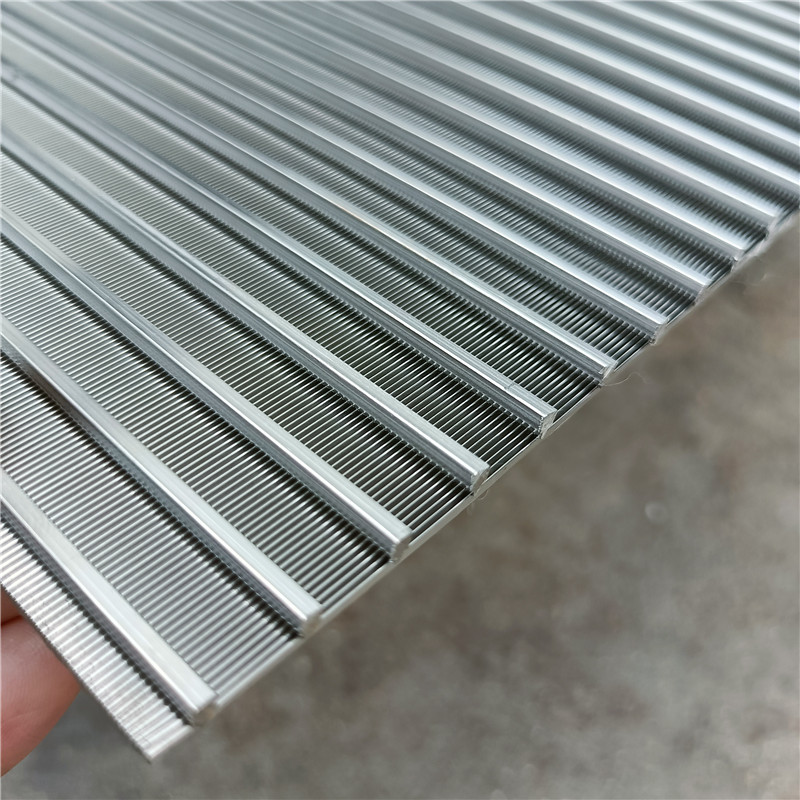
Wire Screens are a versatile mesh product. Industries use them for filtration, separation, and structural support. The options range from woven and welded to crimped and specialty media. Each choice impacts performance and efficiency differently. This article demystifies the different types of wire mesh. It provides a practical guide for selection based on material, weave, and application.
Readers will learn about:
- Woven versus welded construction methods
- Common metal alloys and specialty polymers
- Key specifications like mesh count and wire diameter
- How to match Wire Screens to specific operational needs
This breakdown helps buyers make informed decisions. Understanding these factors ensures the selected Wire Screens deliver optimal results.
Types of Wire Mesh: Woven vs. Welded
Manufacturers build wire screens through two fundamentally different processes. The first method weaves wires over and under each other, much like fabric. The second method places wires in a grid pattern and fuses them at every intersection using resistance welding. This basic difference in construction determines the strength, flexibility, and applications of the final product.
| Feature | Woven Wire Mesh | Welded Wire Mesh |
|---|---|---|
| Manufacturing | Wires woven over and under | Resistance welding at junctions |
| Flexibility | High | Low |
| Primary Use | Filtration, sizing | Structural support, security |
Woven Wire Mesh and Crimped Variants
Woven wire mesh starts with individual wires arranged in perpendicular sets. A loom passes the cross wires alternately over and under the straight wires. This interlocking pattern creates a flexible screen that handles vibration well. For heavy-duty work, manufacturers add crimps to the wires before weaving. A crimp is a small bend pressed into the wire. These bends lock the wires together at each intersection, preventing movement during operation.
Three crimp styles dominate the industry. Double crimp bends both the warp and weft wires at every intersection point. This style offers excellent dimensional stability and resists distortion under heavy loads. Lock crimp creates a tighter mechanical lock by bending one wire around the other at each junction. This design prevents the wires from shifting sideways, which matters in high-vibration environments. Flat-top crimp flattens the upper surface of the screen. This smooth surface allows materials to slide across more easily, reducing wear on both the screen and the processed material.
These types of screen mesh serve the mining and aggregate industries extensively. Quarries use double crimp screens for sizing crushed stone. Aggregate plants rely on lock crimp screens for sorting gravel by size. Flat-top screens excel in applications where material flow must remain consistent. These types of screen mesh deliver consistent results under harsh conditions. The crimped wire mesh construction provides high efficiency because the openings stay uniform even under constant impact from heavy rocks. Compared to perforated plate screens, crimped wire mesh offers better screening efficiency due to the larger open area.
Welded Wire Mesh for Structural Strength
Welded wire mesh takes a different approach. Manufacturers arrange wires in a precise grid pattern. Then they pass electric current through each intersection point. The resistance at the junction generates heat, melting the wires together. This fusion creates a permanent bond at every crossing. The result is a rigid panel with exceptional load-bearing capacity.
The welded construction offers distinct advantages for structural applications. The fused intersections distribute stress evenly across the entire panel. This property makes welded wire mesh ideal for concrete reinforcement. Builders embed the mesh in concrete slabs, walls, and foundations to prevent cracking. The mesh holds the concrete together when tension forces pull the structure apart.
Fencing and security barriers also rely heavily on welded wire mesh. The rigid panels resist cutting and climbing attempts. Property owners choose welded mesh for perimeter fencing because it maintains its shape under pressure. Unlike woven alternatives, welded panels do not unravel when damaged. A cut wire stays in place because the welded intersections hold it securely.
Woven screens excel in filtration and sizing tasks where flexibility and vibration resistance matter. Welded panels provide the structural integrity needed for load-bearing construction.
Different Types of Wire Mesh Materials
The material of wire screens directly affects their performance. The variety of types of wire mesh allows buyers to match properties to specific applications.
Metal Alloys: Stainless Steel and Carbon Steel
Stainless steel offers excellent corrosion resistance for demanding environments. Grades 304 and 316 handle moisture, chemicals, and high temperatures. Food processing plants use stainless steel woven wire mesh for sifting and screening. Chemical facilities rely on these alloys for filtration. These types of screen mesh handle repeated cleaning cycles. This construction withstands frequent washdowns.
Carbon steel provides a cost-effective alternative for general industrial use. This material lacks the corrosion resistance of stainless steel. However, carbon steel delivers sufficient strength for dry applications. Aggregate producers use carbon steel types of screen mesh for sorting stone. The lower material cost makes replacement affordable.
| Material | Key Strength | Typical Application |
|---|---|---|
| Stainless steel | Corrosion resistance | Food processing, chemicals |
| Carbon steel | Cost-effectiveness | Dry industrial screening |
Specialty Media: Polyurethane and Rubber Screens
Polyurethane screens offer unique advantages for high-impact applications. This synthetic material absorbs impact energy better than metal. Mining operations use polyurethane screens for heavy-duty screening. The material reduces noise levels during operation. Polyurethane screens also resist abrasion from sharp rocks.
This durability extends the screen lifespan. Polyurethane screens deliver consistent performance in wet screening. The non-stick surface helps materials pass through openings easily. This efficiency improves overall throughput. Maintenance crews replace polyurethane screens less frequently than metal alternatives. Polyurethane screens represent a valuable investment. Woven wire mesh provides flexibility for filtration tasks.
Rubber screens provide another non-metal option for demanding applications. Rubber offers greater impact resistance than polyurethane. Heavy primary crushers benefit from rubber screen media. The material absorbs the force of falling rocks. This protection reduces damage to the screen deck construction. While polyurethane serves many applications well, rubber excels in extreme impact scenarios. Knitted wire mesh offers a different approach for specialized applications.

Wire Mesh Specifications: Mesh Count and Diameter
Two specifications define wire mesh performance: mesh count and wire diameter. These measurements determine filtration accuracy, flow rate, and structural strength. Buyers must understand both values to select the right product.
How Mesh Count Defines Filtration Accuracy
Mesh count refers to the number of openings per linear inch. A screen with 10 openings per inch has a mesh count of 10. Higher counts mean finer filtration. A 100-mesh screen catches particles that pass through a 20-mesh screen easily.
Square opening screens dominate the industry. This design provides equal openings in both directions. The uniform shape delivers accurate sizing across the entire surface. Manufacturers weave square openings for most filtration and separation tasks. The consistency of square openings makes them the standard choice.
| Mesh Count | Openings per Inch | Typical Use |
|---|---|---|
| 4 | 4 | Coarse aggregate sizing |
| 20 | 20 | Sand and gravel separation |
| 100 | 100 | Fine powder filtration |
| 400 | 400 | Laboratory analysis |
The relationship between mesh count and particle size follows a simple pattern. Higher mesh counts capture smaller particles. Lower counts allow larger materials through. This principle guides selection across all types of screen mesh. The right mesh count prevents both product loss and contamination.
The Role of Wire Diameter in Durability and Flow
Matching Wire Mesh to Applications
Choosing the right wire screen requires more than selecting a mesh size. Buyers should consider the material being processed, particle size, abrasion level, moisture, operating temperature, chemical exposure, and required screening capacity.
The correct combination of screen construction, wire diameter, opening size, and material helps balance durability, accuracy, and flow rate.
Selecting Screens for Industrial Processing
Industrial applications often require screens that can withstand continuous vibration, abrasion, impact, or heavy loads.
Woven wire mesh is widely used for screening, sizing, and filtration because it provides consistent openings and good material flow. Mining, aggregate processing, food processing, and chemical applications commonly use woven screens in different materials and mesh sizes.
Crimped wire mesh provides greater opening stability and is well suited to heavier screening applications. The pre-crimped wires help maintain consistent aperture sizes under vibration and impact.
Welded wire mesh is more rigid and is generally selected where structural strength is more important than screening flexibility. Typical uses include guards, barriers, reinforcement, cages, and industrial partitions.
For abrasive or corrosive environments, material selection is equally important. Stainless steel may be preferred for corrosion resistance, while heavier wire diameters can improve service life in high-wear applications.
Choosing Screens for Commercial and Residential Use
Commercial and residential applications usually place greater emphasis on corrosion resistance, appearance, ventilation, visibility, and ease of maintenance.
Fine woven wire mesh is commonly used for windows, doors, ventilation openings, and insect screening. Aluminum and stainless steel are popular choices because they offer good weather resistance and relatively low maintenance.
Welded mesh is more suitable for applications requiring additional strength, including fencing, security panels, guards, and protective enclosures.
The best screen ultimately depends on the required opening size, strength, environment, and expected service life.
Conclusion
Choosing the correct wire screen depends on the specific applications. Key factors include weave type, material, and wire mesh specifications. Woven wire mesh offers flexibility for filtration tasks. Welded construction provides structural strength. Polyurethane screens deliver excellent wear resistance. Polyurethane material reduces noise. Polyurethane components extend service life. Wire mesh choices affect performance and efficiency.
Different types of screen mesh suit different needs. Polyurethane screens handle high-impact tasks well. Polyurethane properties improve efficiency. Polyurethane structure resists abrasion. Polyurethane maintenance requires less frequent replacement. Polyurethane durability enhances longevity. Woven wire mesh provides reliable filtration. Types of screen mesh help guide proper selection. Polyurethane screens improve operational outcomes.
FAQ
How do I choose between woven and welded wire mesh?
Consider the application first. Woven wire mesh offers flexibility and vibration resistance. It suits filtration and sizing tasks. Welded wire mesh provides rigidity and load-bearing strength. It works best for structural support and security barriers. Match the wire mesh type to the primary function.
What does mesh count mean for my application?
Mesh count measures openings per linear inch. Higher counts capture smaller particles. Lower counts allow larger materials through. A 20-mesh screen separates sand. A 100-mesh screen filters fine powder. Select the count based on your required particle size.
How does polyurethane compare to metal screens?
Polyurethane screens absorb impact better than metal. They reduce noise during operation. The material resists abrasion from sharp rocks. Polyurethane screens last longer in wet conditions. The non-stick surface prevents material buildup. This construction improves overall efficiency. Initial costs run higher, but replacement happens less often.
Can I use the same screen for different materials?
Not effectively. Each material has unique characteristics. Heavy rocks require thicker wires. Fine powders need high mesh counts. Wet materials demand non-stick surfaces. Polyurethane handles moisture well. Metal screens suit dry applications. Match the screen properties to the material for best results.
What maintenance do wire screens require?
Regular inspection prevents unexpected failures. Check for broken wires or stretched openings. Clean screens remove material buildup. Polyurethane screens need less frequent attention. Their durable surface resists wear. Proper care extends screen lifespan. This maintenance routine reduces downtime and replacement costs.