
Effective livestock waste management is a critical challenge for modern farms, manure treatment plants, and agricultural processing facilities. As environmental regulations tighten and operational efficiency becomes increasingly important, solid–liquid separation technology plays a key role in reducing waste volume, improving nutrient recovery, and lowering treatment costs. Among all separation components, the Wedge Wire Screen Manure Separator stands out as one of the most reliable and durable filtration solutions for manure dehydration and wet–dry separation.

The Role of Wedge Wire Screen Manure Separators in Solid–Liquid Separation
In manure treatment systems, solid–liquid separators are used to remove suspended solids from animal waste streams such as pig manure, cow dung, chicken manure, and duck manure. The performance of these systems largely depends on the quality of the screen mesh filter drum installed inside the separator.
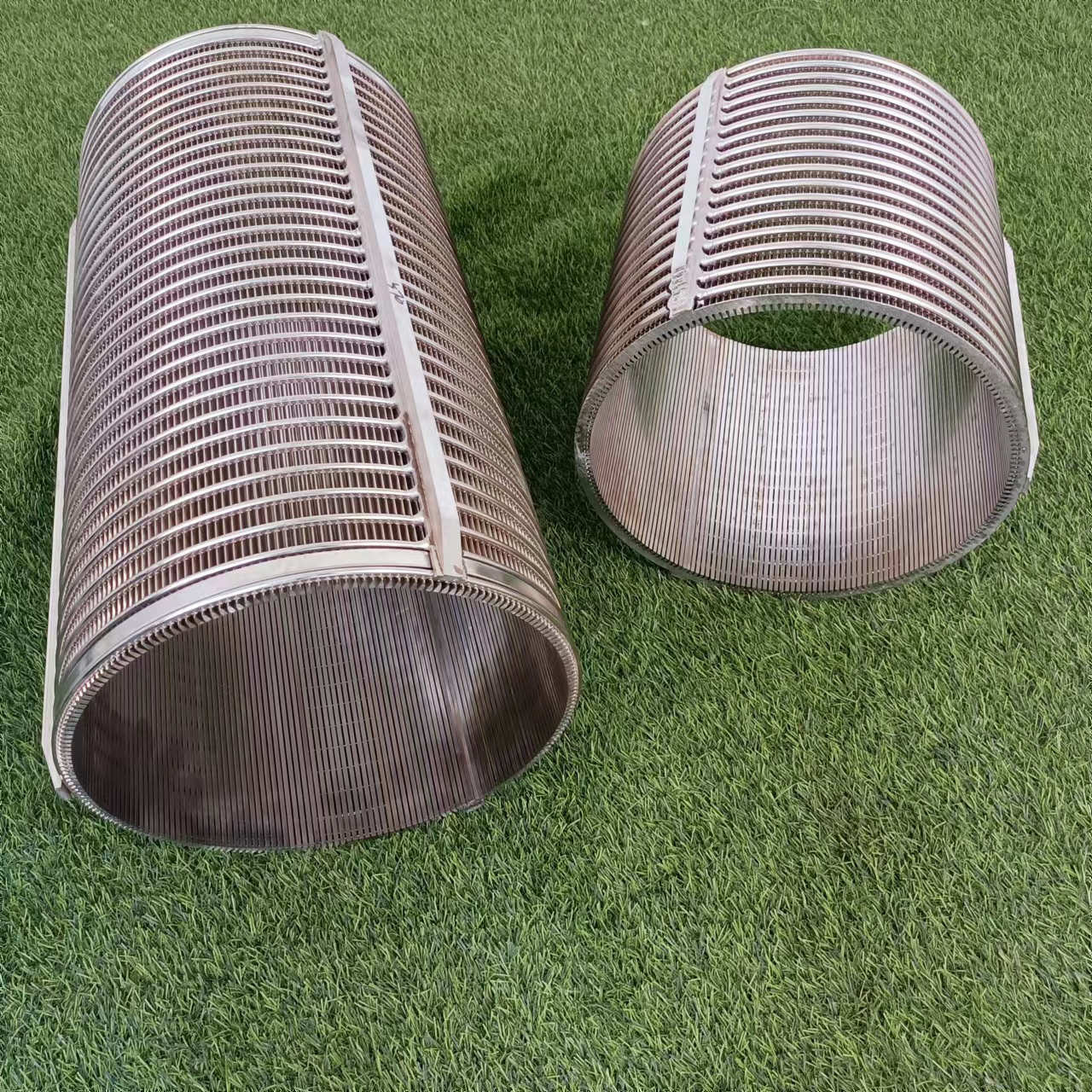
The wedge wire screen cylinder, also known as a wedge-shaped filter screen, is the core filtering element of a solid–liquid separator. It directly determines separation efficiency, clogging resistance, pressure tolerance, and service life. Poor-quality screens lead to frequent blockages, uneven rotation, rapid wear, and reduced dehydration performance.
A high-quality Wedge Wire Screen Manure Separator ensures stable operation even under continuous load and high-solid-content conditions commonly found in livestock waste treatment.
V-Shaped Wire Design for Anti-Clogging Performance
One of the defining features of wedge wire screens is their V-shaped (wedge-shaped) profile wire structure. Unlike perforated plates or woven meshes, wedge wire screens are welded with precisely formed V-shaped wires that create continuous slots.
This design provides several important advantages:
Non-clogging slot geometry: The slot widens inward, allowing solids to slide away instead of becoming trapped.
Smooth filtration surface: Reduces material buildup and improves self-cleaning capability.
High open area: Enhances flow rate while maintaining accurate separation.
Strong welded structure: Capable of withstanding high pressure and mechanical stress.
These characteristics make the wedge wire screen particularly suitable for manure separation, where fibrous materials and sticky solids are common.
High Precision Concentricity for Stable Operation
Inside a solid–liquid separator, there are screw conveyors (also called worms or augers) rotating inside the filter drum. This places extremely high requirements on the roundness and concentricity of the screen cylinder. Any deviation can cause vibration, uneven wear, noise, or even mechanical failure.
Our Wedge Wire Screen Manure Separator is manufactured with strict dimensional control. The concentricity of the screen cylinder is controlled within 0.2 mm, ensuring:
Smooth rotation of internal screw conveyors
Reduced friction and energy consumption
Lower mechanical wear on both screen and auger
Longer service life of the entire separator system
This level of precision has been widely recognized and trusted by customers using manure separators in demanding agricultural environments.
Materials for Corrosion Resistance and Long Service Life
Manure contains moisture, organic acids, ammonia, and corrosive compounds. Material selection is therefore critical for long-term reliability. Wedge wire screen manure separators are commonly manufactured using high-quality stainless steel materials, including:
Stainless Steel 201
Stainless Steel 304
Stainless Steel 316
Stainless Steel 316L
Among these, SS304 and SS316L are most widely used due to their excellent corrosion resistance, mechanical strength, and suitability for continuous operation in wet and aggressive environments.
Classification and Application of Screen Mesh Filter Drums
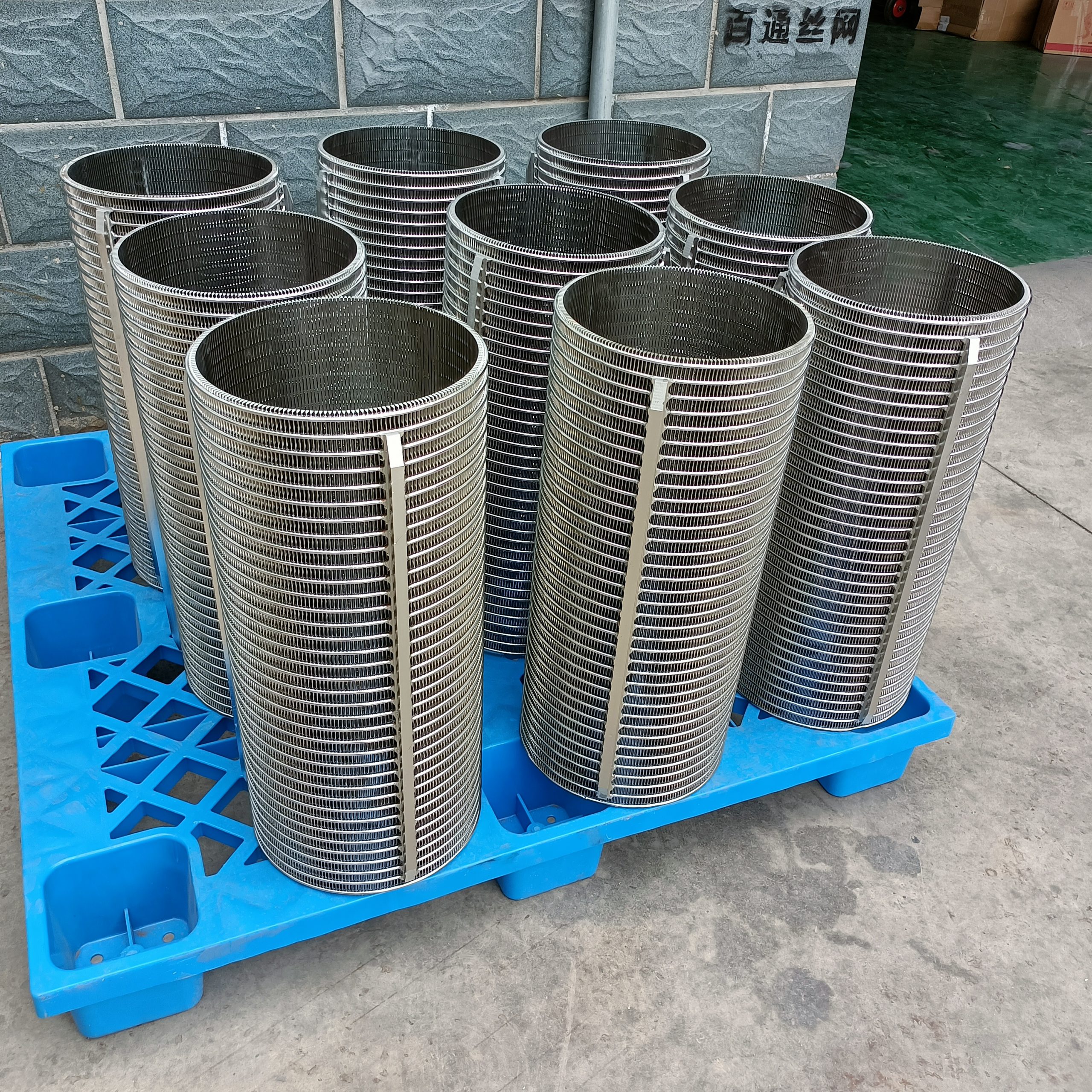
Depending on application requirements, wedge wire screen cylinders can be supplied in various structural forms, including:
Stainless steel welded mine screens
Solid–liquid separator screens
Wet and dry separator screens
Slit screens
Cylindrical screens
Screen baskets
Curved screens
Special-shaped custom screens
These products are widely used in:
Manure solid–liquid separators
Feces dehydration equipment
Wet and dry manure separation systems
Backwash filter elements
Agricultural wastewater treatment
Slot Size Selection for Different Livestock Manure Types
Choosing the correct slot size is essential to achieving optimal separation performance. Based on field application experience, common slot sizes for wedge wire screen manure separators include:
0.1 – 0.3 mm
Suitable for backwash filter elements and fine filtration applications.0.3 – 0.4 mm
Ideal for chicken manure and duck manure dehydrators, where solids are relatively fine.0.5 – 0.6 mm
Commonly used for pig manure dry and wet separators, balancing flow rate and separation efficiency.0.75 – 1.0 mm
Designed for cow dung dry and wet separation, handling larger fibrous solids effectively.
Slot sizes can also be customized according to specific manure characteristics and equipment design.
Standard and Custom Dimensions
To meet different equipment requirements, wedge wire screen manure separators are available in a wide range of sizes.
Common inner diameters include:
150 mm, 175 mm, 180 mm, 200 mm, 250 mm, 260 mm, 280 mm
Standard lengths include:
250 mm, 400 mm, 500 mm, 550 mm, 600 mm
Custom dimensions can be manufactured according to customer drawings or equipment specifications.
Wire Specifications for Strength and Durability
The mechanical strength of a wedge wire screen depends on both wrap wire and support rod dimensions.
Common wrap wire sizes:
0.75 × 1.5 mm, 1 × 2 mm, 1.2 × 2.3 mm, 1.5 × 2.5 mm
2 × 3 mm, 2.2 × 3.5 mm, 3 × 4.7 mm, 3.3 × 6.3 mm
Support rod sizes:
2.3 × 2.7 mm, 3 × 4 mm, 3 × 4.7 mm, 3 × 6 mm
These combinations ensure excellent load-bearing capacity and resistance to deformation under continuous operation.
Conclusion: A Reliable Solution for Modern Manure Treatment
The Wedge Wire Screen Manure Separator is a proven, high-performance filtration component for livestock waste management systems. With its anti-clogging V-shaped wire design, high-precision concentricity control, corrosion-resistant stainless steel materials, and flexible customization options, it delivers consistent separation efficiency and long service life.
For farms, agricultural processors, and environmental equipment manufacturers seeking reliable manure separation solutions, wedge wire screen cylinders offer a technically sound and cost-effective choice that supports cleaner operations and sustainable waste management.


