
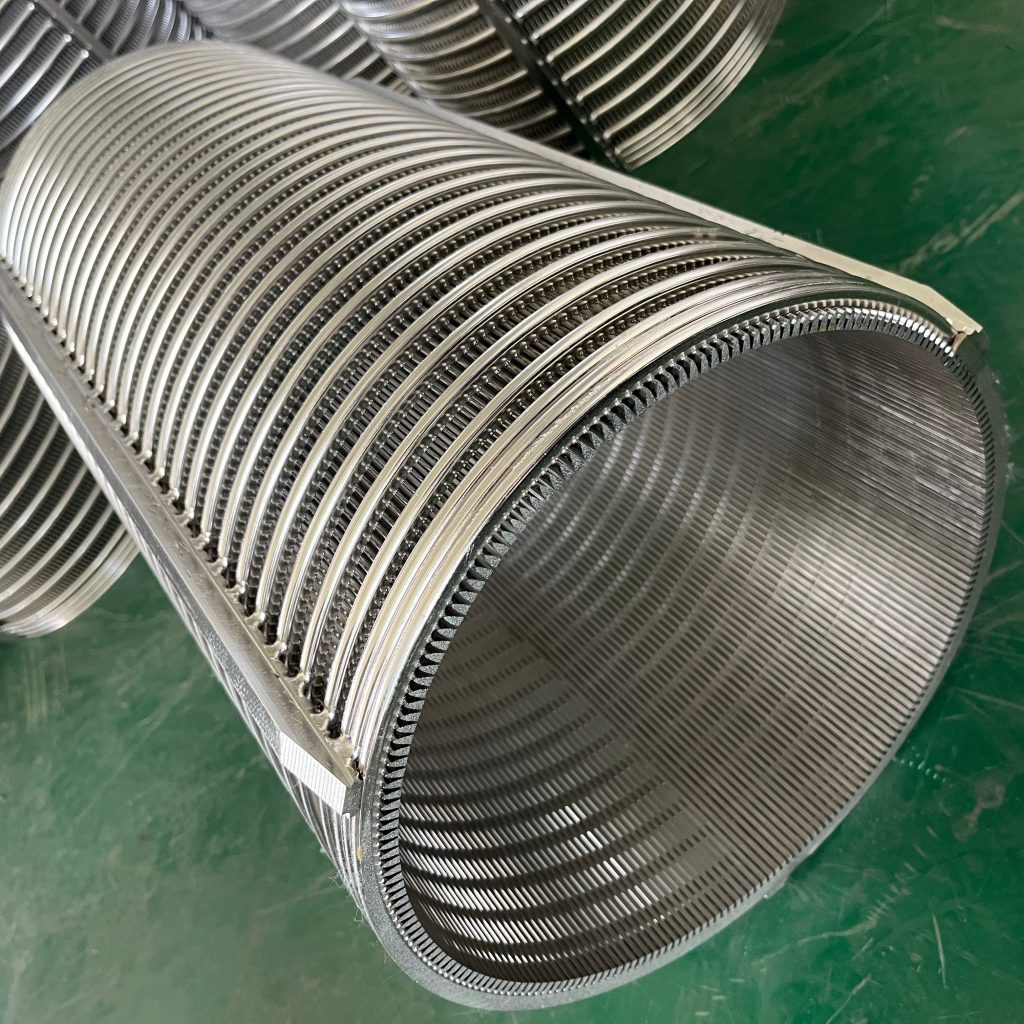
Technical datasheets for wedge wire screens often feel overwhelming. Dense tables, unfamiliar terms, and endless numbers can confuse even experienced buyers. This guide translates those complex wedge wire screen specifications into practical buying criteria. What do you actually need to know to avoid a costly mistake? The answer lies in a few key areas: dimensions, materials, slot size, and profile shape.
Each specification directly impacts performance, lifespan, and total cost of ownership. We will break down these factors in a clear, structured way. You will gain the confidence to evaluate any quote. This knowledge helps you choose the right wedge wire screen for your exact needs.
Key Wedge Wire Screen Specifications
Every wedge wire screen specification sheet contains dozens of numbers. Most of those numbers matter only in specific contexts. A buyer needs to focus on a handful of critical parameters that determine whether the screen will perform correctly. These parameters fall into two main categories: dimensional ranges and slot characteristics. Understanding these two areas prevents costly mismatches between the screen and its intended application.
Dimensional Ranges and Custom Tolerances
The physical size of a wedge wire screen determines where it can fit and how much material it can process. Standard cylindrical screens offer diameters ranging from 0.750 inches to 38 inches. Larger fabricated sections extend beyond this range for specialized industrial applications. The length of each screen section varies according to the vessel or housing dimensions. A buyer must measure the existing installation carefully before ordering a replacement screen.
Custom tolerances play a vital role in the selection process. Standard manufacturing tolerances work for many applications. However, some installations require tighter size and shape tolerances to ensure a proper seal or fit. For example, a screen that must slide into an existing housing may need a diameter tolerance of just a few thousandths of an inch. A screen with loose tolerances might leak unfiltered material around the edges. This leakage defeats the entire purpose of the filtration system.
| Parameter | Standard Range | Custom Option |
|---|---|---|
| Diameter | 0.750 to 38 inches | Larger fabricated sections |
| Length | Varies by application | Custom dimensions available |
| Tolerance | Standard manufacturing | Tightened for specific fits |
The profile shape also affects dimensional specifications. The V-shaped wire profile creates a continuous slot on the surface. The support rods underneath provide structural strength. The combination of these two components determines the overall dimensions of the finished screen. Buyers should request a detailed drawing from the supplier to verify all dimensions before production begins.
Slot Size and Open Area
Slot width stands as the most critical specification for filtration performance. The slot opening determines the maximum particle size that can pass through the screen. Wedge wire screens can achieve slot openings as small as 0.004 inches. This precision allows for fine filtration in demanding applications. The accuracy of the slot width directly affects the consistency of the filtration result.
Open area represents the percentage of the screen surface that actually allows flow. A larger open area means higher flow rates and lower pressure drops. The relationship between slot size and open area follows a simple pattern. Wider slots create more open area. Narrower slots reduce open area but provide finer filtration. The wire profile shape also influences this relationship. The V-shape allows particles to pass through the slot without becoming trapped, which maintains consistent flow over time.
Flow rate depends on both slot size and open area. A screen with a 0.004-inch slot opening will pass less liquid than a screen with a 0.020-inch opening, assuming identical dimensions. Buyers must balance filtration precision against throughput requirements. A screen that filters perfectly but restricts flow too much will starve the downstream process. Conversely, a screen with excessive open area may allow unwanted particles through.
The slot width tolerance matters as much as the nominal slot size. A screen specified at 0.010 inches with a loose tolerance might actually produce slots ranging from 0.008 to 0.012 inches. This variation affects filtration consistency. Quality manufacturers maintain tight control over slot width during the welding process. Buyers should ask suppliers about their slot width tolerances and quality control procedures.
These wedge wire screen specifications determine whether the final product meets the application requirements. Understanding these parameters helps buyers compare quotes from different suppliers on an equal basis. The right specifications translate directly into reliable performance and lower total operating costs.
Material Quality and Selection for Wedge Wire Screens
The material choice for a wedge wire screen determines its resistance to corrosion, its lifespan, and its ability to handle specific cleaning methods. Two stainless steel grades dominate the market: SS304 and SS316L. Both offer excellent corrosion resistance. The right choice depends on the chemical environment and the cleaning agents used in the facility.
Stainless Steel Grades: SS304 vs. SS316L
SS304 serves as the standard grade for many filtration applications. It handles neutral liquids, fresh water, and mild chemicals without degradation. This grade offers a balance of strength and affordability. Many buyers choose SS304 for general-purpose screening where aggressive chemicals are absent.
SS316L contains molybdenum, an element that boosts resistance to chlorides and acids. This grade performs better in marine environments, chemical processing plants, and applications involving saltwater or brine. The “L” designation indicates a lower carbon content. This lower carbon reduces the risk of corrosion at weld points. A screen welded from SS316L maintains its integrity longer in harsh conditions.
| Property | SS304 | SS316L |
|---|---|---|
| Corrosion resistance | Good for mild environments | Superior for chlorides and acids |
| Molybdenum content | None | Present |
| Typical applications | Water, food processing | Marine, chemical, pharmaceutical |
| Relative cost | Lower | Higher |
Cleaning methods also influence the material choice. Harsh cleaning agents, such as strong acids or caustic solutions, attack the screen surface over time. SS316L withstands these aggressive cleaning cycles better than SS304. Facilities that sanitize equipment frequently should select SS316L to extend screen life. A buyer should evaluate both the process fluid and the cleaning protocol before choosing a grade.
Surface Finish and Abrasion Resistance
The surface finish of the wire affects how particles interact with the screen. A smooth, uniform surface allows particles to slide through the slot without sticking. A rough surface creates friction points where material can accumulate. This accumulation leads to clogging and reduced flow rates. The consistency and uniformity of the wire surface stand as physical factors that directly impact performance.
Quality manufacturers control the wire drawing process to produce a consistent surface. They inspect the finished wire for defects, pits, or irregularities. These imperfections create anchor points for particles. A screen with a high-quality surface finish resists fouling and maintains its flow capacity over extended periods. Buyers should request surface finish specifications from suppliers and compare them across quotes.
Abrasion resistance relates to both the material hardness and the surface treatment. Particles moving across the screen at high velocity can wear away the wire surface. This wear widens the slots over time. Wider slots allow larger particles to pass through, degrading filtration precision. Screens handling abrasive slurries or high-velocity flows require harder materials or specialized surface treatments.
The manufacturing process also influences structural quality. Reputable suppliers follow established standards for welding and finishing. They maintain a quality management system that documents every production step. Buyers should ask whether the supplier holds international certification for their manufacturing processes. This certification provides assurance that the screens meet consistent quality standards. Suppliers who meet export quality standards demonstrate their ability to deliver reliable products across borders.
A screen built from the correct material with a superior surface finish delivers longer service life and lower maintenance costs. The initial price difference between SS304 and SS316L often proves insignificant compared to the cost of premature replacement. Buyers who prioritize material quality and surface consistency avoid the hidden costs of frequent downtime and screen replacement.

Manufacturing Details and Structural Integrity
The manufacturing process determines how long a screen lasts and how well it performs under real operating conditions. A wedge wire screen consists of two main parts: the V-shaped wire profile and the support rods beneath it. The wire wraps around the support rods. Each intersection receives a weld. This continuous welding creates a rigid structure that resists deformation under pressure.
Welding Methods and Support Rod Design
The welding method affects the strength and consistency of the finished screen. Resistance welding is the most common technique. This process fuses the wire to the support rod at each contact point. A quality weld creates a permanent bond. A weak weld can separate under load. The result is a wider slot or a complete screen failure.
Support rod design must match the load direction and installation geometry. Screens installed vertically experience different forces than screens mounted horizontally. A screen inside a pressure vessel faces inward pressure. A screen in a gravity-fed system faces downward forces. The spacing between support rods determines how much weight the screen can bear. Closer rod spacing provides more support. Wider spacing allows more open area for flow. Buyers should specify the operating pressure and flow direction when ordering. This information helps the manufacturer select the correct rod size and spacing.
| Design Factor | Consideration |
|---|---|
| Load direction | Vertical, horizontal, or pressure-driven |
| Rod spacing | Balances structural support with open area |
| Weld quality | Determines long-term structural integrity |
Custom Configurations and Connection Types
Wedge wire screens come in several shapes. Cylindrical screens fit inside vessels and housings. Flat panels work for gravity-fed systems and troughs. Curved screens suit applications requiring a specific flow path. Each shape serves a different purpose. The choice depends on the installation space and the filtration goal.
Custom dimensions optimize filtration efficiency for specific applications. A screen built to fit an existing housing eliminates bypass leakage. A screen with a custom length maximizes the usable filtration area. Manufacturers can adjust the diameter, length, and end connections to match the existing piping. Common connection types include flanged ends, threaded fittings, and welded couplings. Each connection type requires different installation procedures. Buyers should verify the connection type against the existing system before ordering.
The manufacturing process follows established standards. Reputable suppliers document their welding parameters and inspection procedures. These standards ensure consistent quality across every production batch. A buyer who requests detailed manufacturing documentation gains confidence in the final product. This documentation also helps with future replacements and maintenance planning.
Conclusion
The journey began with the basic anatomy of a wedge wire screen. It ends with mastery of the critical wedge wire screen specifications. A specification sheet is not a random list of numbers. It is a map to operational efficiency and cost savings. Every dimension, slot size, and material choice affects long-term performance. Buyers should now ask suppliers better questions.
Request detailed material certifications. Clarify welding standards. Verify quality control procedures. These actions confirm the screen meets quality expectations. Understanding these critical specifications empowers a buyer. The final decision balances upfront cost with long-term reliability. This knowledge prevents costly mistakes and ensures the screen performs as designed.
FAQ
How do I measure the correct diameter for my application?
Measure the inside diameter of your existing housing or vessel. Account for the clearance needed for installation. A screen that fits too tightly may bind. A screen that fits too loosely allows bypass leakage. Request a detailed drawing from your supplier to verify all dimensions before production.
What slot size should I choose for my filtration needs?
The slot size determines the maximum particle that passes through. Start with your required filtration precision. Consider your acceptable flow rate. Smaller slots filter finer but restrict flow. Larger slots pass more liquid but allow bigger particles. Balance these factors against your process requirements.
How do I know if I need SS304 or SS316L?
Evaluate your process fluid chemistry. SS304 handles neutral liquids and mild chemicals. SS316L resists chlorides and acids better. Consider your cleaning agents too. Harsh sanitizers attack the screen surface. Facilities using aggressive cleaning cycles should select SS316L for longer service life.
What questions should I ask a supplier before ordering?
Ask about slot width tolerances and welding methods. Request material certifications and surface finish specifications. Inquire about their quality control procedures. Verify they meet export quality standards. Confirm their manufacturing follows recognized standards. A reputable supplier will provide documentation without hesitation.
How does open area affect my operating costs?
Open area directly influences flow rate and pressure drop. A screen with more open area passes more liquid with less energy. This reduces pumping costs. A screen with less open area restricts flow. This increases energy consumption. Choose the largest open area that still meets your filtration precision requirements.


