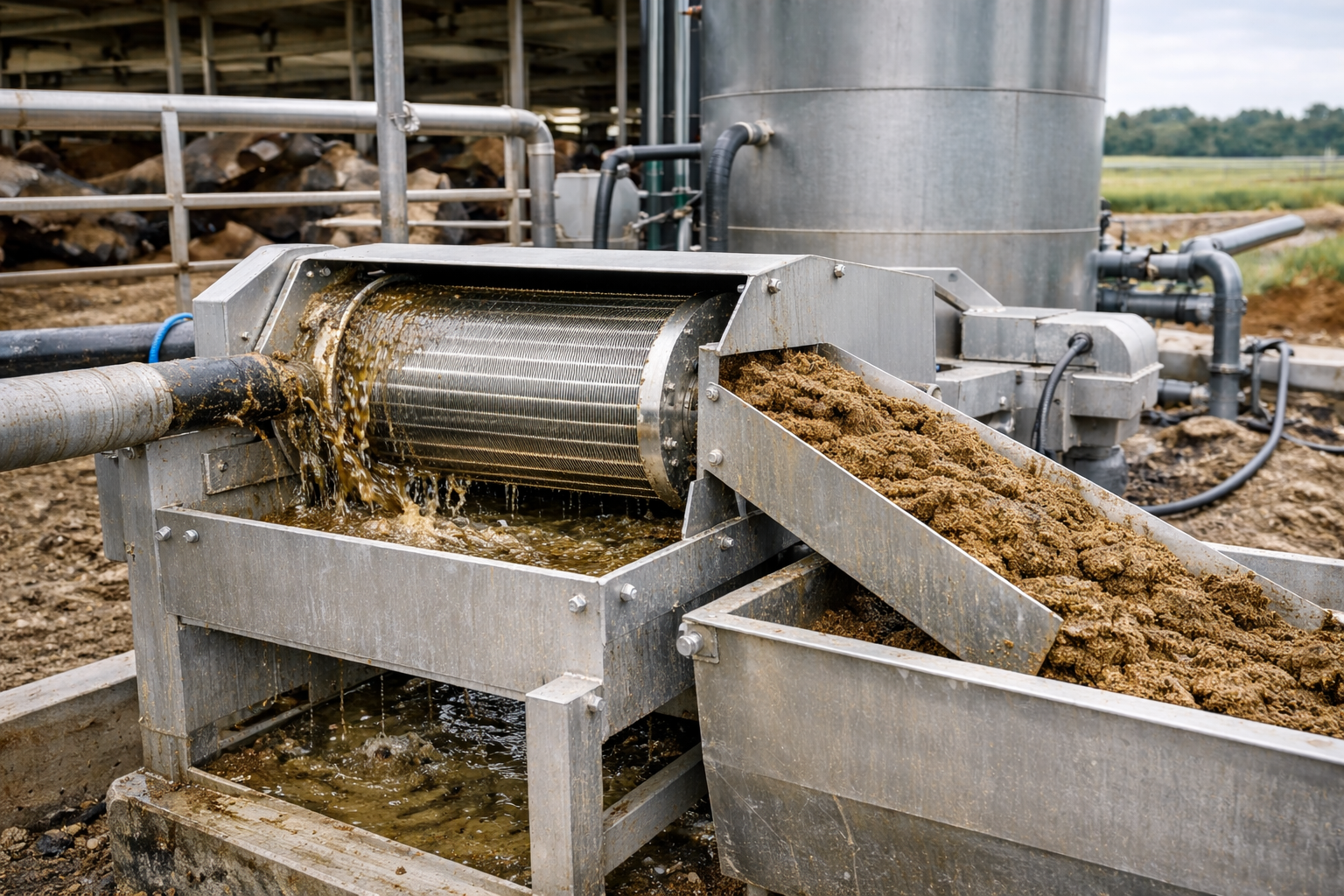
The rapid development of intensive livestock farming has greatly improved food production efficiency, but it has also brought serious challenges in manure management. Animal manure contains large amounts of organic matter, nutrients such as nitrogen and phosphorus, and a wide range of microorganisms. If livestock waste is discharged directly without proper treatment, it can cause severe pollution to soil and water bodies, leading to eutrophication, groundwater contamination, and long-term ecological damage.
To address these issues, modern livestock operations increasingly rely on efficient waste treatment technologies. Among them, solid–liquid separation has become a fundamental step in manure management systems. At the center of this process is the Wedge Wire Screen Manure Separator, a key filtration component that directly determines separation efficiency, system stability, and operating cost.
Why Solid–Liquid Separation Is Essential in Livestock Waste Management
Livestock manure is a complex mixture of liquid, suspended solids, fibers, and fine organic particles. Treating this mixture as a whole is inefficient and costly. Solid–liquid separation allows manure to be divided into two manageable fractions:
Liquid fraction: Rich in dissolved nutrients, suitable for use as liquid organic fertilizer or for irrigation after further treatment.
Solid fraction: High in organic matter and fiber, suitable for composting, biogas production, or reuse as soil conditioner.
By separating solids from liquids at an early stage, farms can reduce storage volume, lower transportation costs, and improve the efficiency of downstream treatment processes. This separation process is widely applied in pig farms, dairy farms, poultry farms, and centralized manure treatment facilities.
Screw Separators and the Role of the Wedge Wire Screen Manure Separator
Among various separation technologies, screw separators are one of the most commonly used systems in livestock waste treatment. They are favored for their simple structure, continuous operation, and relatively low energy consumption. However, the performance of a screw separator depends largely on the quality of its internal filtration component—the wedge wire screen cylinder.
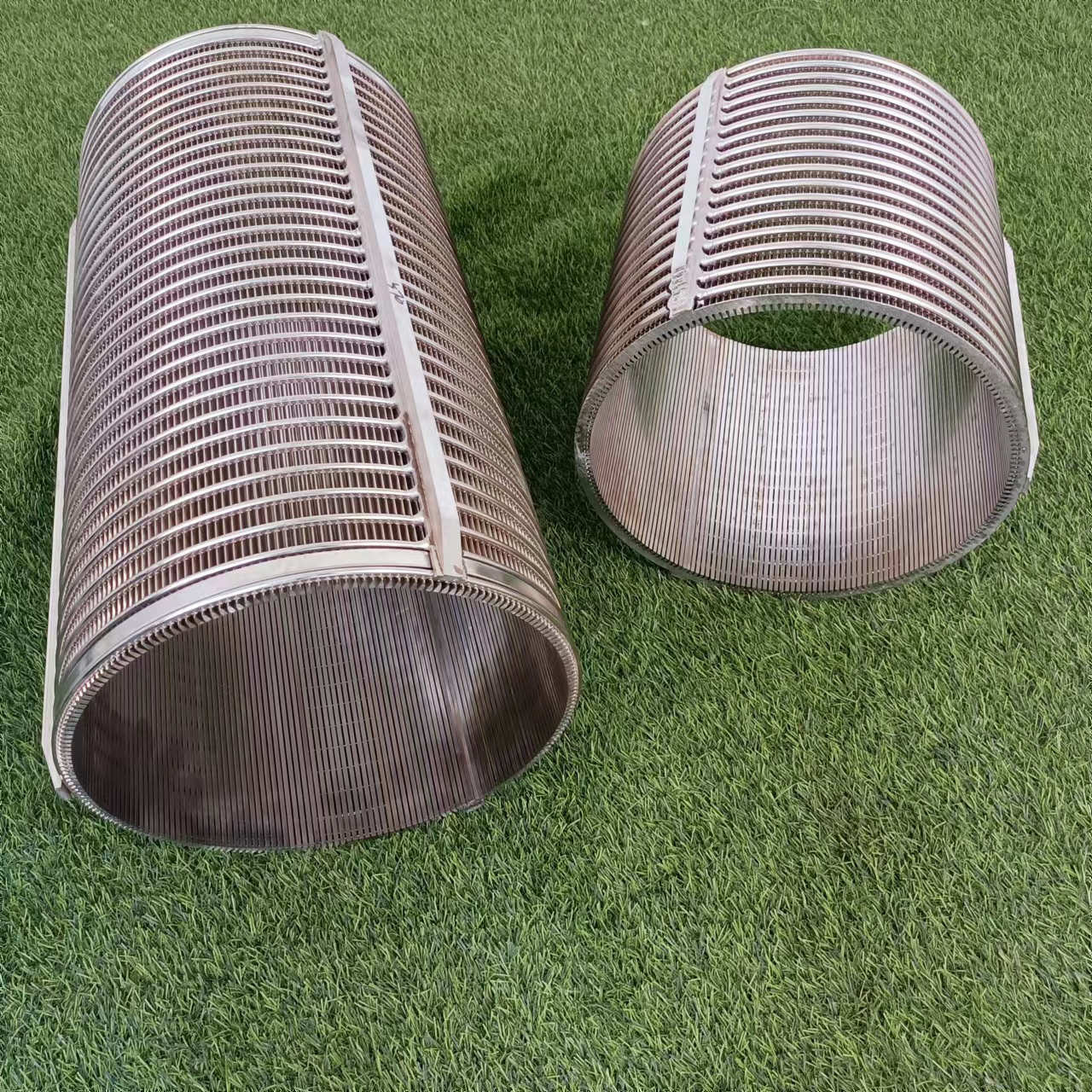
The wedge wire screen manure separator acts as the filtration barrier inside the screw separator. As manure slurry enters the separator, it is compressed by the rotating screw shaft inside the cylindrical screen. Under pressure, liquid passes through the slots of the wedge wire screen, while solid material is retained and transported toward the discharge outlet.
If the screen design is poor or lacks precision, problems such as clogging, uneven separation, excessive wear, and reduced throughput quickly appear. Therefore, the wedge wire screen cylinder is not just a spare part, but the core element that defines separation quality and system reliability.
Structural Design of Wedge Wire Screen Cylinders
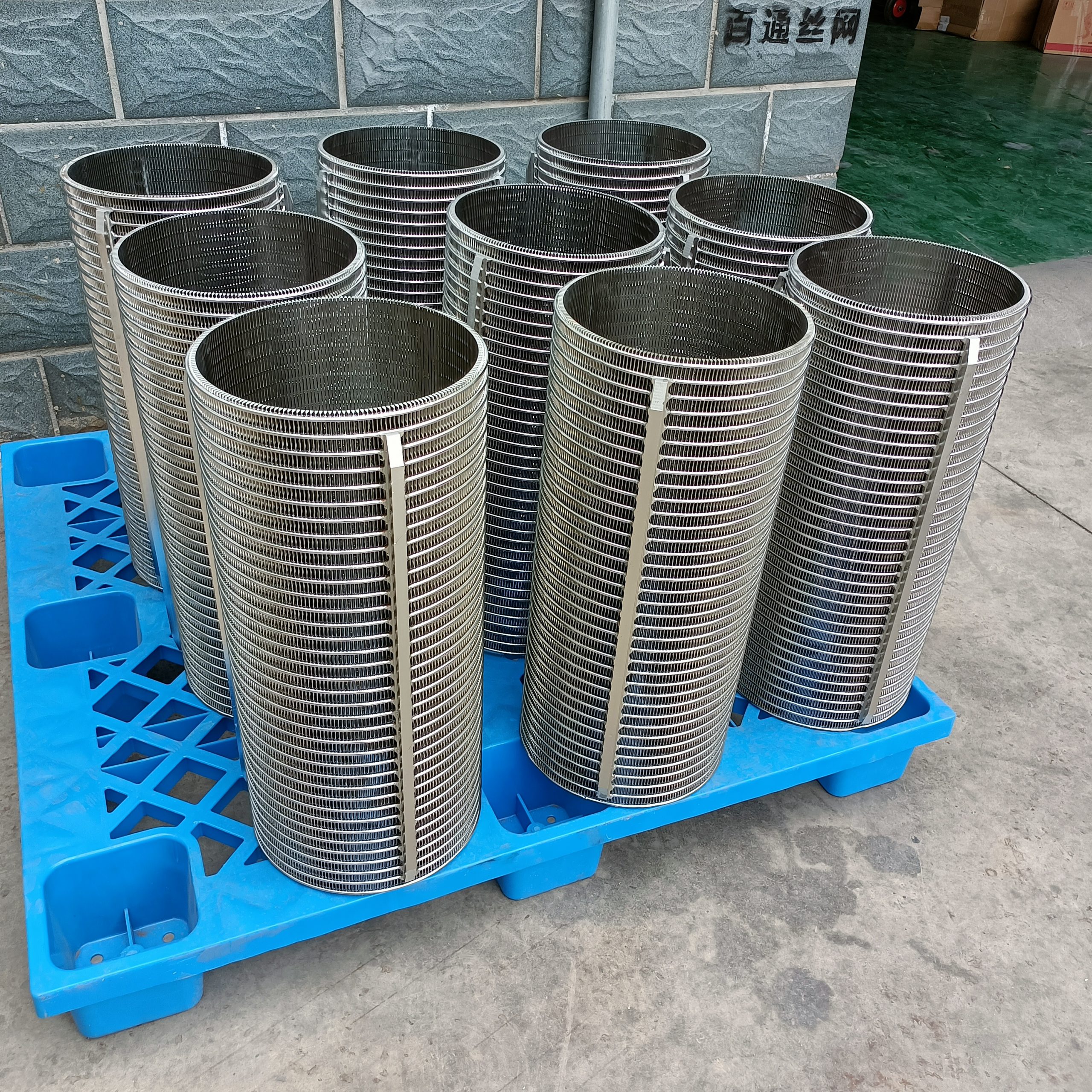
The Wedge Wire Screen Manure Separator is manufactured using V-shaped profile wires welded onto support rods to form a rigid cylindrical structure. This design differs significantly from perforated plates or woven wire meshes.
The wedge-shaped wire creates slots that are wider on the inside and narrower on the outside. This geometry offers a natural anti-clogging effect, as particles are less likely to become trapped in the slots. Fibrous materials, common in livestock manure, are guided along the screen surface instead of blocking the openings.
In addition, the welded construction provides excellent mechanical strength, allowing the screen to withstand continuous compression forces generated by the screw shaft. This makes wedge wire screen cylinders suitable for long-term operation under high-load conditions.
Precision and Concentricity in Screw Separator Applications
Inside a screw separator, the screw shaft rotates continuously within the wedge wire screen cylinder. This design places extremely high demands on the screen’s roundness and concentricity. Even small deviations can cause vibration, abnormal noise, increased power consumption, or damage to the screw and bearings.
High-quality wedge wire screen manure separators are manufactured with strict dimensional control. Concentricity is typically controlled within 0.2 mm, ensuring smooth rotation and uniform clearance between the screw and the screen surface. This precision directly contributes to stable operation, reduced mechanical wear, and extended service life of the entire separation system.
Material Selection for Harsh Manure Environments
Livestock manure is highly corrosive due to moisture, ammonia, organic acids, and microbial activity. As a result, material selection is critical for wedge wire screen manure separators.
Common materials include stainless steel 201, 304, 316, and 316L. Among these, SS304 and SS316L are widely preferred for manure separation applications because of their excellent corrosion resistance, strength, and hygienic properties. These materials maintain structural integrity even after long-term exposure to aggressive manure environments, reducing maintenance frequency and replacement costs.
Slot Size Selection Based on Livestock Type
Different types of livestock produce manure with varying particle size, fiber content, and moisture level. Selecting the correct slot size for the wedge wire screen manure separator is essential for achieving optimal separation results.
Typical slot size recommendations include:
0.1–0.3 mm for backwash filter elements and fine filtration
0.3–0.4 mm for chicken and duck manure separation
0.5–0.6 mm for pig manure dry and wet separation
0.75–1.0 mm for cow dung separation, where fiber content is higher
Slot size can also be customized based on specific operating conditions and separator design.
Custom Dimensions and Structural Flexibility
Wedge wire screen manure separators are available in a wide range of standard and custom sizes. Common inner diameters range from 150 mm to 280 mm, while standard lengths vary from 250 mm to 600 mm. Custom dimensions can be produced to match different screw separator models and capacity requirements.
Wrap wire and support rod dimensions are selected based on load requirements, ensuring the screen maintains its shape and performance under continuous compression.
Long-Term Benefits of Using Wedge Wire Screen Manure Separators
Compared with conventional screening solutions, the wedge wire screen manure separator offers several long-term advantages:
Stable separation efficiency
Reduced clogging and downtime
Lower maintenance requirements
Longer service life
Improved reuse of manure resources
These benefits help livestock operations achieve more sustainable waste management while complying with environmental regulations.
Conclusion
The Wedge Wire Screen Manure Separator plays a decisive role in modern livestock waste treatment systems. As the core filtration component in screw separators, it directly affects separation efficiency, operational stability, and environmental performance. With its anti-clogging wedge wire design, high manufacturing precision, corrosion-resistant materials, and flexible customization options, it provides a reliable solution for efficient solid–liquid separation in livestock manure management.
By choosing a well-designed wedge wire screen cylinder, farms and equipment manufacturers can improve waste utilization, reduce environmental impact, and support the long-term sustainability of the livestock industry.